
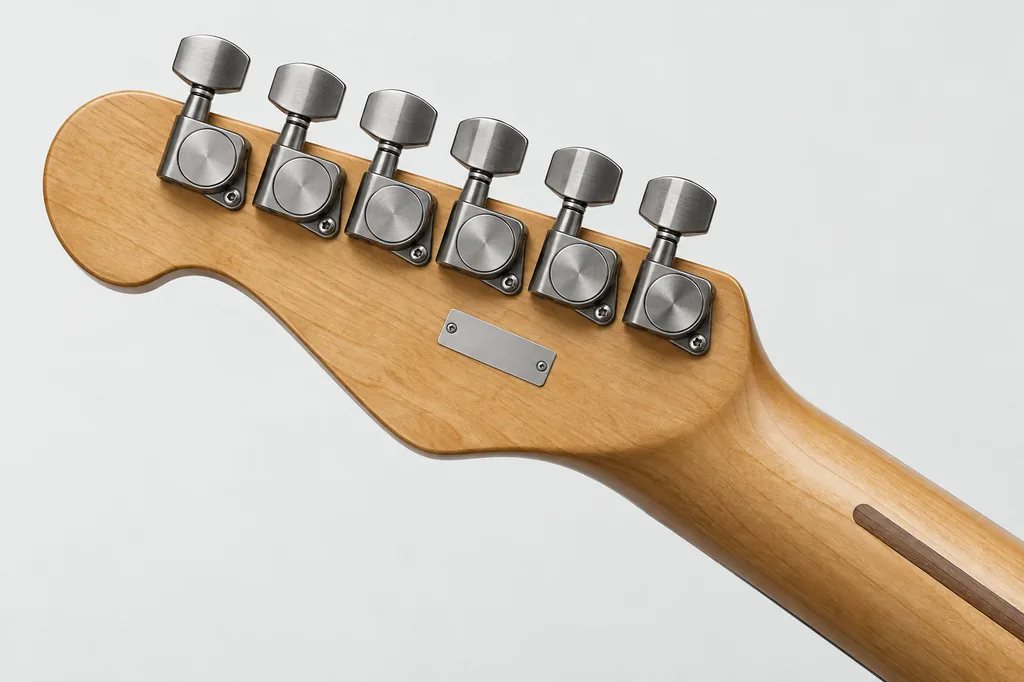
Fender electric guitar serial number locations
Turn the guitar carefully and examine the full rear face of the headstock under even light. A dark finish, wear, or glare can hide characters. Photograph the marking straight on and take a wider image that shows its position.
If it is not there, inspect a fitted neck plate. Some plates carry a serial; others show only a model or assembly marking, and many guitars have no serial there. Do not remove the neck to search for a date code unless a repairer has a specific reason.
Fender bass serial number locations
Check the headstock back and then a fitted neck plate. Use a soft cloth only when dust blocks the view; do not scrape a decal or polish a worn marking. If a neck or hardware may have been replaced, note which component carries the number.
A nearby country decal or model marking adds context but does not replace the serial. Photograph both the number and surrounding parts. If clues point to different eras or regions, compare them with a repair record or Fender support before drawing a conclusion.
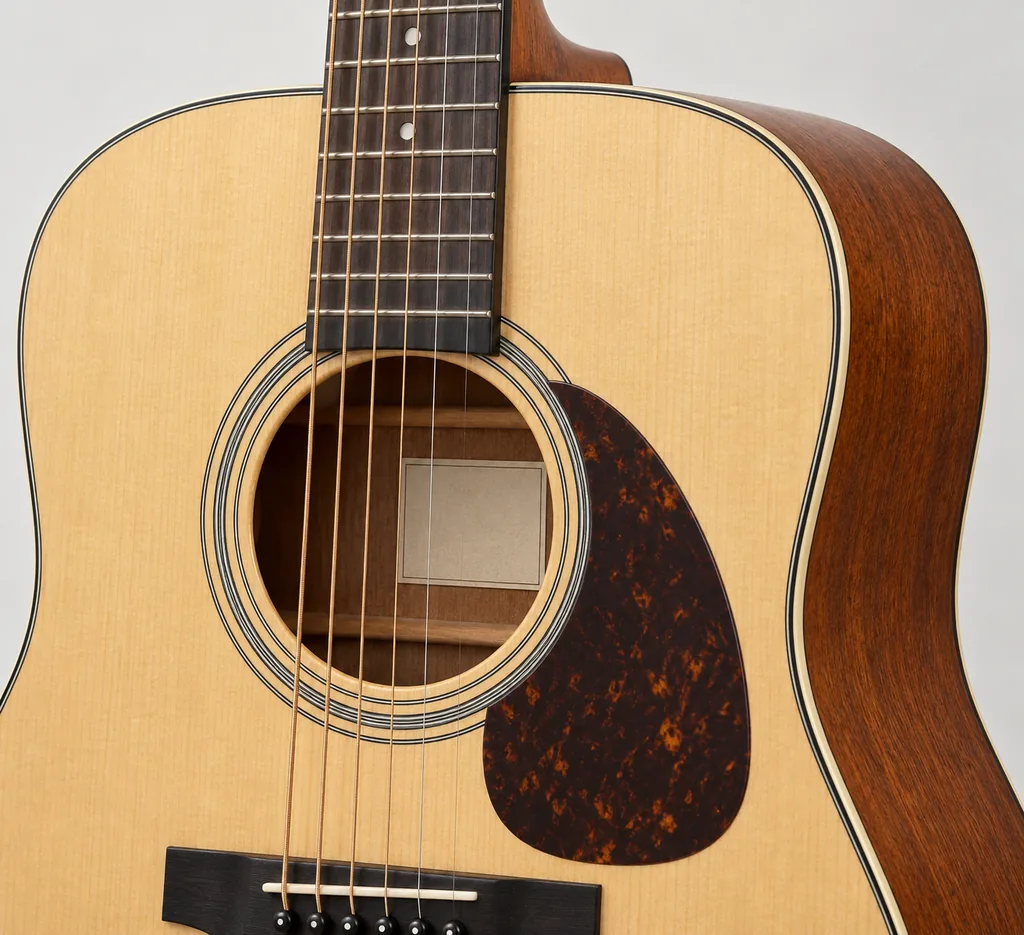
Fender acoustic guitar serial number locations
Look through the sound hole for a label or printed number. A flashlight and small mirror can help you see it without moving the strings or reaching deep inside. Photograph the complete label because it may also show model or origin details.
Label style and placement vary. A missing, faded, or replaced label makes serial-only dating less certain. If it is unreadable, use the model name and intact label details when asking Fender support or a repairer; do not put tools or liquids inside the body.
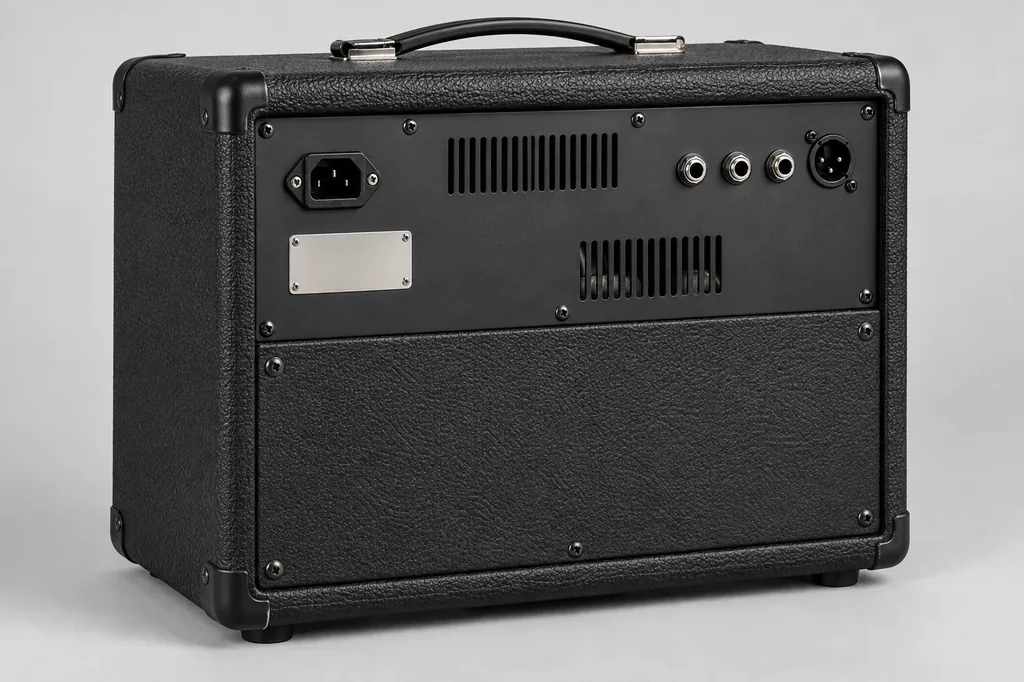
Fender amplifier serial number locations
Inspect the rear cabinet label and read every field. The serial, model designation, electrical rating, and component date code are different; a code on a part may not date the finished amplifier.
Keep the amp unplugged and do not open the chassis. Tube amps can retain dangerous voltage after switch-off, so internal work belongs to a qualified technician. If the outside label is damaged, photograph the cabinet and model details and contact Fender support.
Why the location can vary by model and year
Serial placement changes with instrument type, model, and production period, and repairs can alter what is visible. Some vintage references describe numbers on bridge or tremolo-related plates; treat those as secondary locations and do not remove hardware to look underneath.
A serial can also belong to a replaced neck, plate, or component. Compare it with country and model markings, construction, and paperwork. Preserve conflicting clues instead of choosing the most convenient date; a plausible range or matching font cannot authenticate a complete instrument.
- Check the expected location for the instrument type before searching less common surfaces.
- Record where the number appears and whether the part looks original or replaced.
- Compare nearby model and country markings without treating them as proof of authenticity.
- Keep uncertain or conflicting evidence visible when you request expert review.
A safe way to inspect and record the number
A repeatable search makes comparison easier. Set the instrument on a stable surface, use diffuse light, and capture what is visible before cleaning or moving anything.
- Identify the instrument. Guitars, basses, acoustics, and amps have different likely locations.
- Check the common area. Look at the headstock or neck plate, sound hole, or amplifier rear label as appropriate.
- Use light, not force. Try a flashlight, mirror, or camera zoom while leaving parts in place.
- Record context. Photograph the full sequence, its location, and nearby model markings.
- Compare carefully. Use the independent decoder as a reference and ask Fender support or a technician about conflicts.
If the serial is missing, worn, or hard to read
A number missing from the first location does not prove an instrument is counterfeit or incomplete. Recheck with better light and consider model layout or replacement parts. If characters are unclear, record the uncertainty instead of guessing from a partial prefix.
Do not sand, scrape decals, open an amplifier chassis, or detach a neck to uncover a number. For a valuable purchase or repair, share clear photos and paperwork with Fender support or a repair professional.
What to do after you locate a Fender serial number
Now that you know where to find a Fender serial number, copy the visible characters in order, including letters, zeros, spaces, and punctuation. Keep an unedited photo beside your transcription. Compare the format with instrument type, country, model, and construction details; overlapping ranges or replaced parts can leave several explanations.
Use the independent lookup as a reference and compare important results with Fender's official guidance. It cannot certify authenticity, originality, ownership, or value. When physical evidence conflicts, ask a technician or Fender support rather than changing the input to get a preferred answer.